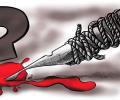
'By extending the definition of 'personal' to include institutions and not just individuals, the State has equipped itself with a tool to block access to most kinds of information.'

Companies, particularly those that are notified as Significant Data Fiduciaries, will have to make extensive investments in data mapping, process modification, consent management tools, tools to enable Data Principal Rights, and establish a well-structured Data Privacy Officer organisation.

The Supreme Court has refused to grant an interim stay on the imposition of Merchant Discount Rate (MDR) on UPI person-to-merchant transactions exceeding Rs 2,000, which is set to take effect from October 15. The court has agreed to examine the challenge to this new fee and has issued notices to the Centre, RBI, and NPCI, seeking their responses within four weeks. A Public Interest Litigation (PIL) argues that the levy lacks statutory safeguards, transparency, and public consultation, and could adversely affect merchants and consumers.

'Digital arrests are the cutting edge of the problem and the most challenging part of the ecosystem right now.'

A Public Interest Litigation has been filed in the Supreme Court challenging the Centre's decision to impose a 0.4 per cent Merchant Discount Rate (MDR) on UPI person-to-merchant transactions exceeding Rs 2,000. The plea argues that the levy was introduced without adequate statutory safeguards, transparency, or public consultation, and questions its constitutional validity and potential adverse effects on merchants and consumers.

Personal data like mobile numbers, PAN, addresses and pre-existing medical conditions of about 3.1 crore customers of Star Health Insurance is allegedly available on a website created by a hacker identified as xenZen. The hacker claimed that Star Health's Chief Information Security Officer (CISO) sold all the data and later tried to change the terms of their deal.

Experts at a national symposium in Shillong discussed the role of Artificial Intelligence in tourism, emphasising that AI should support human judgment, local knowledge, and cultural values rather than replace them. Discussions highlighted the need for robust policies to address ethical concerns, safeguard livelihoods, and preserve cultural heritage while leveraging AI for innovation and sustainability in the tourism sector, particularly in Meghalaya.

The Jammu and Kashmir Crime Branch has filed a chargesheet against 15 individuals in the Kishtwar minor's rape and death case. The chargesheet alleges a criminal conspiracy to conceal the sexual assault, intimidate the victim's family, and illegally terminate her advanced pregnancy. The 15-year-old tribal girl died on August 20 following an alleged abortion attempt after being repeatedly sexually assaulted by a teacher, resulting in pregnancy. Accused include the main perpetrator, health workers, and community elders involved in the cover-up and pressure tactics.

A 61-year-old man from Mangaluru was allegedly cheated of Rs 2.07 crore by cyber fraudsters posing as officials of central investigative agencies in a 'digital arrest' scam, police said.

Recently, an Air India flyer sent a legal notice to the airline seeking damages of Rs 30 lakh for the breach of personal data of 4.5 million passengers, including her husband and herself. Air India had informed the complainant of the data leak a month earlier, after it emerged that its passenger service system provider fell prey to a cyberattack in February. However, in the absence of a data protection law, India lacks a mechanism for compensation or grievance redress of consumers in such cases, say experts. Advocate Virag Gupta, a New Delhi-based cyber law expert, explains that a legal notice is a good beginning in the Air India case, but it raises many questions. These include whether sensitive personal information has been leaked and whether the airline is responsible or not, given that a passenger service system provider was also involved.

The National Payments Corporation of India (NPCI) stated that the Merchant Discount Rate (MDR) "is distributed only amongst the UPI ecosystem, to further invest into infrastructure resilience, innovation, cybersecurity (protecting the UPI infrastructure with banks and non-banks) and customer service."

...on par with oil, power, and defence, and to restrict its storage under foreign control.

The Indian government has introduced a 0.4% transaction fee on Unified Payments Interface (UPI) payments exceeding Rs 2,000 for merchants, effective October 15, marking the end of nearly six years of free service. Person-to-person transfers and small-value transactions below Rs 2,000 remain free. The new Merchant Discount Rate (MDR) is capped at Rs 300 for transactions above Rs 75,000, with differentiated rates for essential sectors and investments, and safeguards to prevent costs from being passed to consumers.

Significant controls and exemptions to the government under the proposed Digital Personal Data Protection bill 2022 are likely to make it harder for companies to invest in data centres and data processing activities in India, according to global technology industry body ITI. The ministry of electronics and IT has floated draft Digital Personal Data Protection (DPDP) Bill 2022 and has invited comments on the same till January 2. "The Bill grants significant controls to the executive arm of GOI (Government of India) and delegates much of the detailed rulemaking authority to separate, as yet undefined processes.

Consumers worldwide overwhelmingly are ready to share their personal information to get better services from their doctors, bank and retailers, but they are cautious about how they share.

The DPDP rules, which have come into effect, require companies to implement a data protection and consent management system by November 2026.
The Indian government has introduced a 0.4% Merchant Discount Rate (MDR) on UPI person-to-merchant (P2M) transactions exceeding Rs 2,000, effective October 15. This move ends nearly six years of fully free UPI payments, though person-to-person (P2P) transfers and small P2M payments remain free. The charges aim to bolster investment in UPI infrastructure, with specific exemptions and caps for essential sectors.

Microsoft CEO Satya Nadella on Tuesday announced plans to invest $17.5 billion in India to help build infrastructure and sovereign capabilities for the country's AI-first future, marking the third major AI-driven investment in the country in the past two months. Microsoft said that the $17.5 billion (around Rs 1.58 lakh crore) investment builds on the $3 billion (around Rs 26,955 crore) funding announced earlier this year, which the company is on track to spend by the end of CY (calendar year) 2026.

The Registrar General and Census Commissioner of India, Mritunjay Kumar Narayan, has reassured the public that individual data collected during the upcoming census will remain confidential and cannot be used for any purpose other than statistical aggregation.
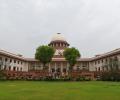
The draft regulations for use of AI in courts 'shall apply to the use, deployment, or integration of AI in any judicial, adjudicatory or administrative function of the Supreme Court of India, high courts, and all courts including the Tribunals and statutory Commissions performing adjudicatory functions, within the territory of India'.

'It's not about individuals operating the mule accounts being more or less skilled. Instead, 'lower-level' refers to the role the individual account plays in the broader mule network.'

The government has raised the penalty amount to up to Rs 500 crore for violating the provisions proposed under the draft Digital Personal Data Protection Bill 2022 issued on Friday. The draft personal data protection bill in 2019 proposed a penalty of Rs 15 crore or 4 per cent of the global turnover of an entity. The draft proposes to set up a Data Protection Board of India, which will carry on functions as per the provisions of the bill.

The Union Cabinet on Friday approved Rs 11,718 crore for conducting the Census of India, 2027, which would include the caste enumeration for the first time.

Customers will qualify for compensation even if they mistakenly share the OTP.

Indian firms caught napping as private details of individuals were leaked

'By leveraging user data from WhatsApp, Meta can enhance its technology.' 'It (user data) is collected by me, it's my personal property. Shall I give it to my competitors?'

At what age should society stop regulating life choices and allow people to make their own?
The court is hearing appeals against a CCI order imposing a penalty on Meta and WhatsApp.

The government will "notify such countries or territories outside India to which a data fiduciary may transfer personal data", according to the draft unveiled on Friday for public feedback.

The CBI has filed a chargesheet against the husband and mother-in-law of former model and actor Twisha Sharma, accusing them of mental cruelty that led to her suicide. The chargesheet relies heavily on text messages sent by Sharma, detailing her suffocation and distress, and awaits crucial forensic reports from her iPhone and other digital evidence.
"All they have done in their entire report is privacy regulation," counsel appearing for WhatsApp told the appellate tribunal.

The Supreme Court has issued interim directions regarding nationwide protests over the NEET paper leak, ordering the release of minor student protesters without criminal records and directing states to preserve all digital evidence. The court also called for a fair and independent investigation into allegations of police excesses against students, while also acknowledging concerns for injured police personnel.
During an open house discussion with stakeholders on the draft Digital Personal Data Protection (DPDP) bill 2022, Chandrasekhar said that the right to privacy is a fundamental right while the right to information is not. "Right to privacy is a fundamental right and right to information is not.

Sarvam's LLM will have more than 17 trillion tokens with 17 to 20 per cent coming from Indian data

After the draft data protection bill, the government is now all set to bring another key legislation -- Digital India Bill -- that will be made available for public consultation by the month-end, Minister of State for IT Rajeev Chandrasekhar said on Thursday. The Digital India Bill, which will replace the 22-year old Information Technology (IT) Act, will be contemporary and a modern piece of legislation, the Minister promised. The proposed bill, alongside the Digital Personal Data Protection (DPDP) Bill whose draft was released recently, will contribute to the evolving framework which is light on regulation, safeguards consumer rights and catalyses innovation, the minister said while speaking at CII Global Economic Policy Summit 2022.

You should rather use nicknames, incorrect date of birth and if possible make a separate e-mail address for such apps and services. You should also not share your phone number

'We do have some concerns with the timeline being shortened from 18 to 12 months.'

'The impact will be minimal and it will only increase compliance cost on consent, data flows, localisation timelines, internal audits, data mapping, and new tooling.'

A sophisticated cross-bank syndicate is systematically defrauding non-resident Indians (NRIs) and elderly citizens by exploiting their fixed deposits through forged documents and fictitious loans, often involving colluding bank employees and real estate deals.

A suspected operative of Pakistan-based terror outfit Jaish-e-Mohammed (JeM) was arrested in West Bengal's Purba Bardhaman district, and investigators believe he could be part of an ISI-backed network tasked with collecting intelligence on VIPs including BJP leaders, recruiting operatives and laying the groundwork for possible terror activities in the state.
